

Will An Fx Lens Work On A Dx Camera
Because the glass elements in a camera lens are circular, lenses project a round epitome onto a camera'south sensor airplane. This projected image circle must be large enough to cover the rectangular sensor, similar so:
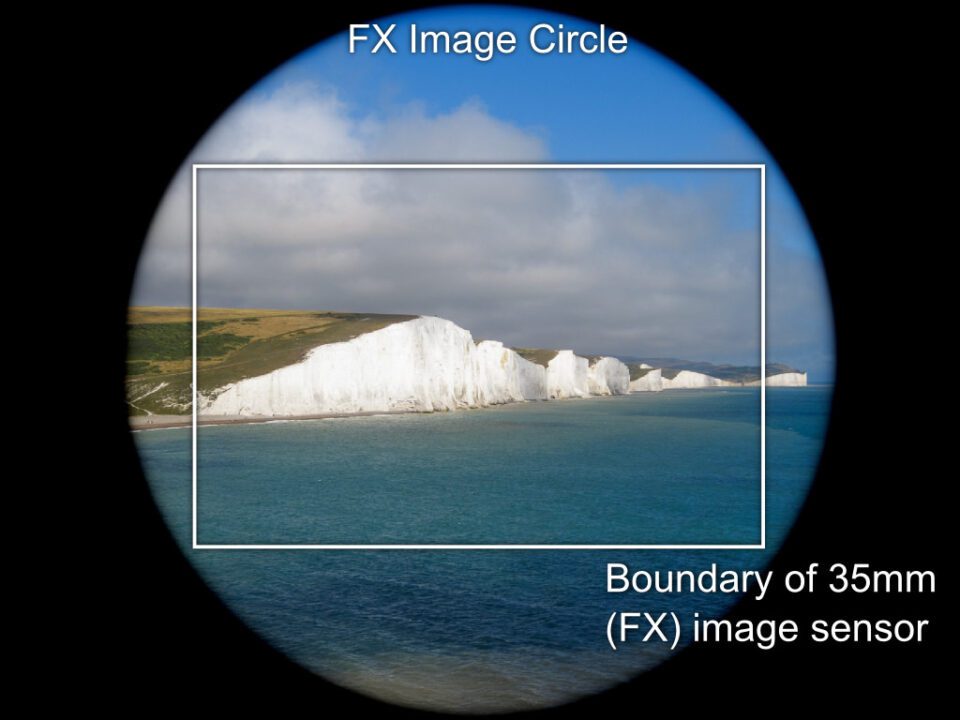
Lenses designed for Nikon DX generally project a smaller image circle because they just need to cover the smaller DX sensor. This enables a DX lens to be smaller and lighter, simply also means that these lenses are not suitable, past design, for FX cameras. For the Canon ecosystem this constabulary is absolute, as EF-South lenses, designed for a smaller APS-C size sensor, cannot exist mounted on total frame EF bodies.
The smashing thing near Nikon is that they exercise their best to offering astern compatibility. Mounting DX lenses on FX bodies has e'er been possible, with the FX DSLR automatically cropping the image frame to merely output the surface area covered by the DX sensor.
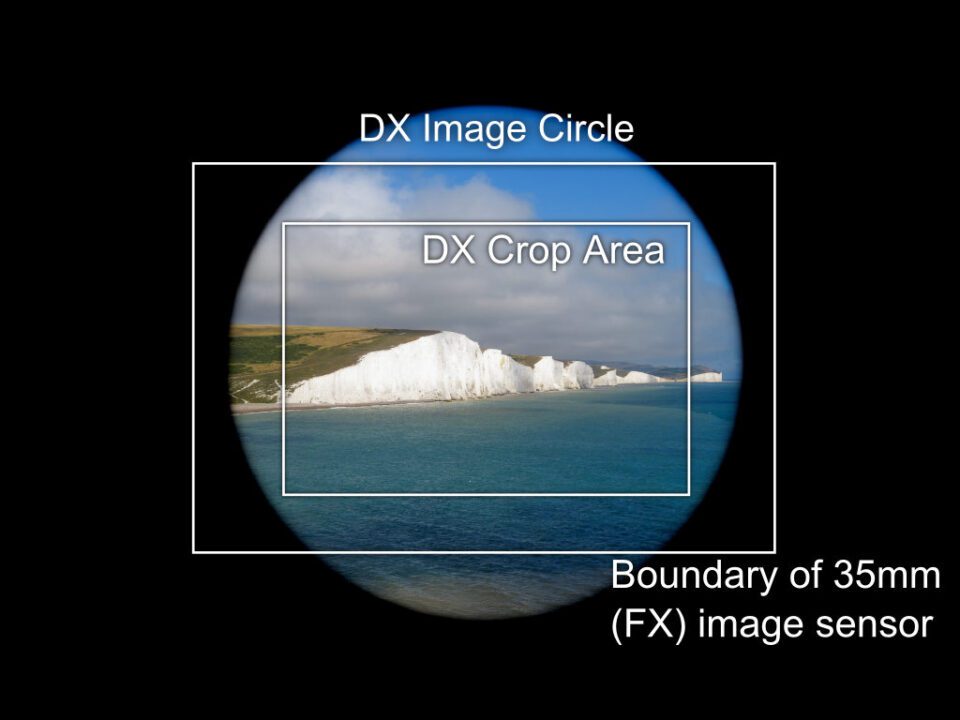
Additionally, you can fix the camera to output the full FX frame regardless of the mounted lens, by accessing Shooting Menu -> Image Surface area -> Motorcar DX crop -> OFF.
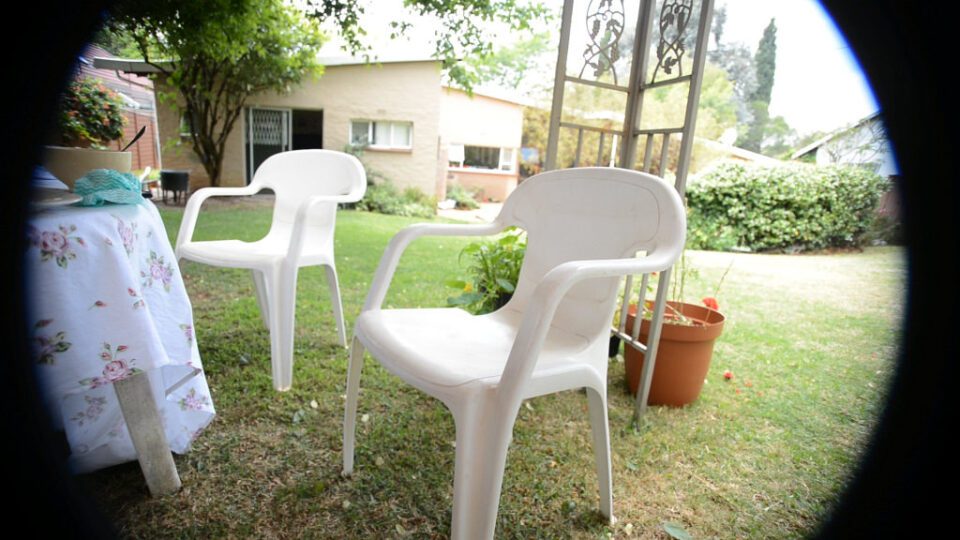
You might expect this to spell trouble with DX lenses considering of extreme vignetting. Indeed this is what i sees when mounting many types of dedicated DX lens, espsecially zooms, on FX bodies. Here is an instance of what you see with a Nikon 18-200mm f/3.5-5.6G DX VR lens on a Nikon FX camera (single frame from a Hard disk drive video sequence recorded with a Nikon D600):
The bad news is that high quality FX lenses like Nikon's golden "trinity" are intimidatingly expensive, big and heavy.
The adept news is that not all DX lenses behave every bit y'all might expect. Two DX lenses that I dearly honey are my Nikon 35mm f/one.8G DX and my Tokina 11-16mm f/2.8 AT-Ten Pro DX. These 2 stand for the all-time of DX as they are minor, fast, light and affordable, yet still perform excellently. What many owners may not know is that both of these lenses embrace the full FX frame circle!
Nikon 35mm f/1.8G DX on FX
Until recently, the merely fast modern 35mm lens that Nikon offered for FX was the expensive professional 35mm f/1.4G prime number. With the recent declaration of the 35mm f/ane.8G ED the situation has improved a lot from the affordability perspective. Nevertheless the 35mm f/1.8G DX is the most affordable still, and ane of Nikon'south most pop lenses to date – for a reason!
How can you wait it to perform on FX? I was pleasantly surprised. As expected, FX corner performance is nothing to write domicile almost, and some noticeable vignetting is visible. Yet at larger apertures (larger than F8) the vignetting is bearable. Big discontinuity prime lenses are ofttimes used to draw attention to a single object, and then corner sharpness is seldom crucial. Vignetting may be aesthetically pleasing, and tin can exist corrected to some extent. The eye operation remains impressive, as this is what the lens has been designed for.
This trivial 35mm's minor size makes it unobtrusive and truly portable – especially desirable qualities for street photography. 35mm counts as moderate broad angle on FX which allows for only a scrap more flexibility in creating interesting compositions compared to a 50mm "normal" lens.
Here are some examples:

35mm f/1.8G DX at f/i.viii (direct from .NEF – distortion and vignetting non corrected)

35mm f/1.8G DX at f/v.6 (directly from .NEF – distortion and vignetting not corrected)
In my opinion these photographs are quite usable. With some vignetting correction in Adobe Lightroom, the photo at f/2.viii looks as follows – compare it to the supplied photograph taken with the large Nikon 24-70mm f/2.8G ED – one of Nikon'southward professional FX "trinity" lenses.
Both photographs below were taken at 35mm f/2.viii, but which was taken with which lens? At a casual glance these photographs are hard to tell autonomously – the elevation photograph was taken with the 35mm f/i.8, while the lesser photograph was taken with the 24-70mm f/2.8.


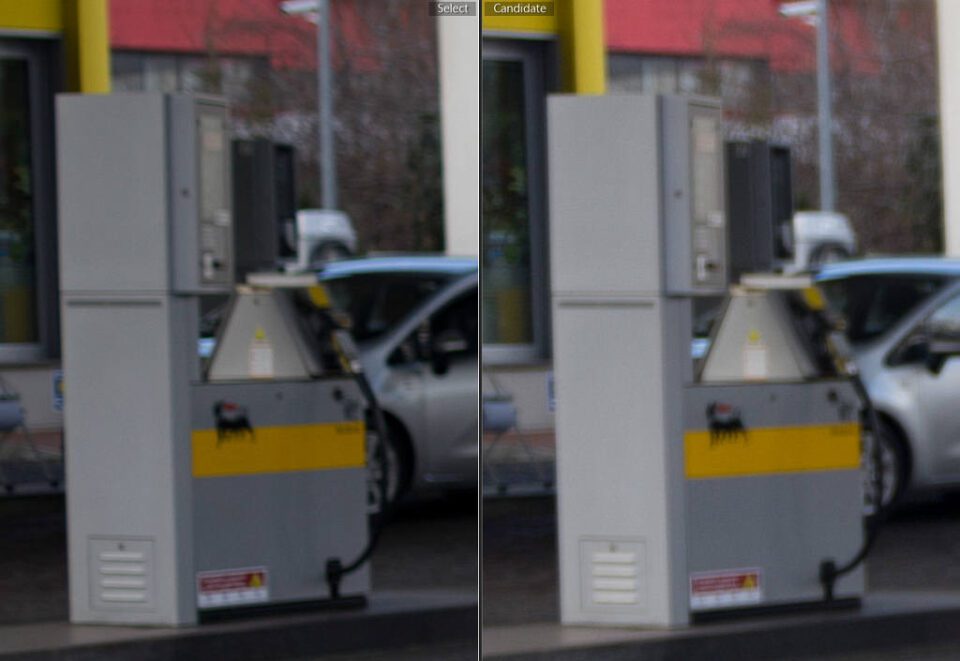
Fifty-fifty zooming in to 100% pixel-level item shows footling difference, equally the corners are out of focus anyhow (in both cases, the 35mm f/1.8 is on the left):

Caveat: starting at f/5.6, and especially at longer distances, the smaller image circle does become visible. With decreasing apertures, vignetting increases in the farthermost corners. Personally I mainly use fast prime lenses at large to medium apertures, then this need non be a trouble. Be aware, however, that in very bright light without using an ND filter this lens volition becomes less usable equally you will have to resort to smaller apertures. This makes the 35mm f/one.viii DX lens great for street photography, but less so for e.g. studio work where depth of field needs is attained past smaller apertures.
Uncorrected prototype with focal point at infinity, f/5.6. Here vignetting is already becoming intrusive:
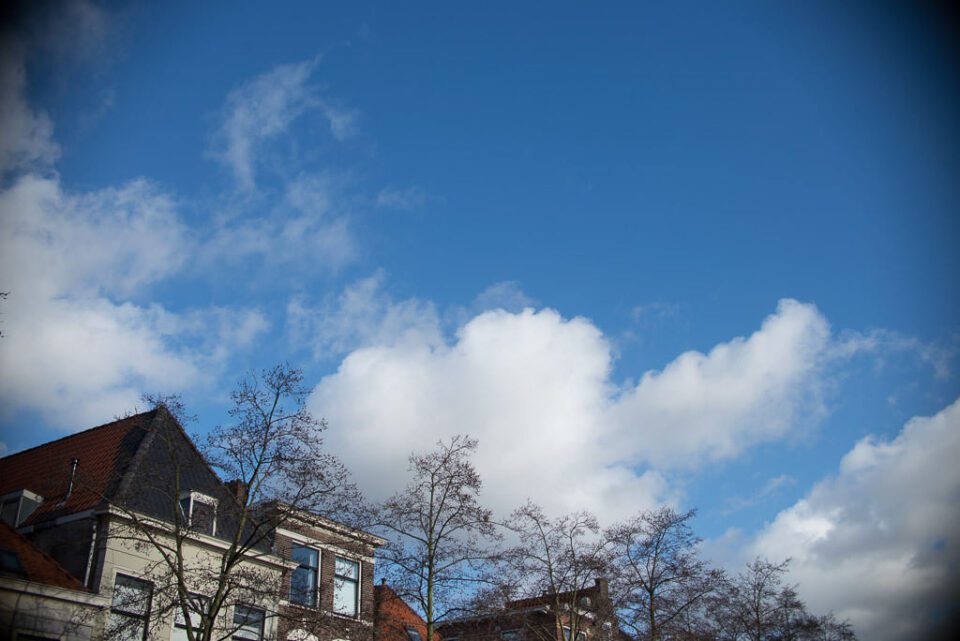
At f/22, vignetting is very clearly defined (just as the dust on my Nikon D600's sensor):
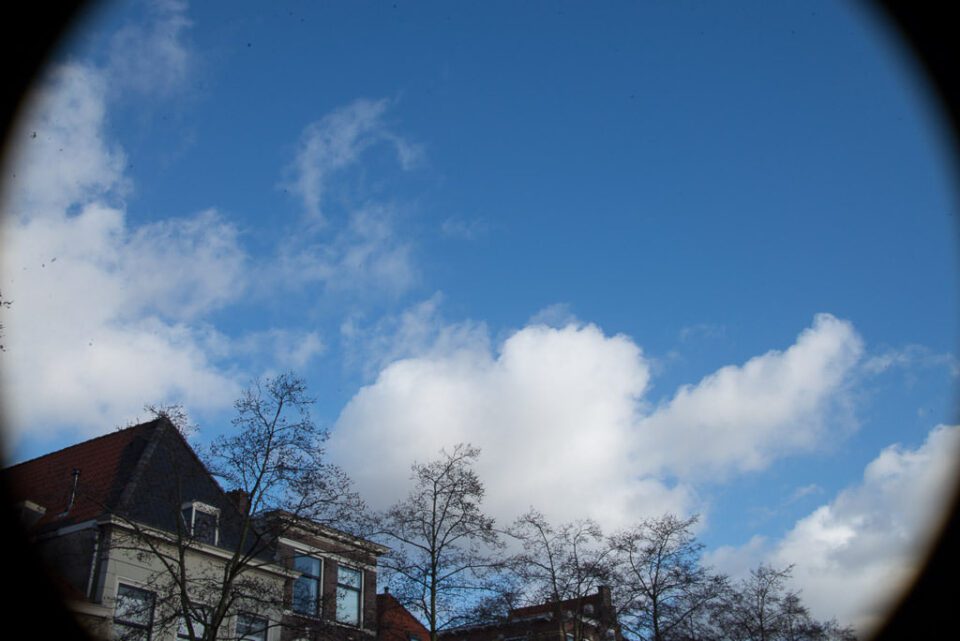
Uncorrected image with close focal point, f/5.6. At this closer focal distance vignetting is much less pronounced than at infinity, and not as intrusive:

At f/22, vignetting is again conspicuously divers, but less severe than at longer focal distances:

Tokina 11-16mm f/2.eight AT-X Pro DX
The other lens that I want to talk about is the Tokina 11-16mm f/2.8. Regarded as ane of the best ultra-broad-angle lenses for DX, information technology has the same performance on DX every bit a xvi-24mm f/4.0 lens would have on an FX trunk. But what happens when you put information technology on an FX torso?
At 11mm the vignetting is rather extreme:

At 15mm the vignetting starts to disappear:

As we zoom in to 16mm, vignetting becomes less and less of an issue, up to the bespeak where there is almost no visible vignetting any more at 16mm f/2.viii:

The corners tin exist improved by stopping down – here the extreme right-mitt edge is shown at 15mm f/two.viii (left) versus 15mm f/5.vi (right):
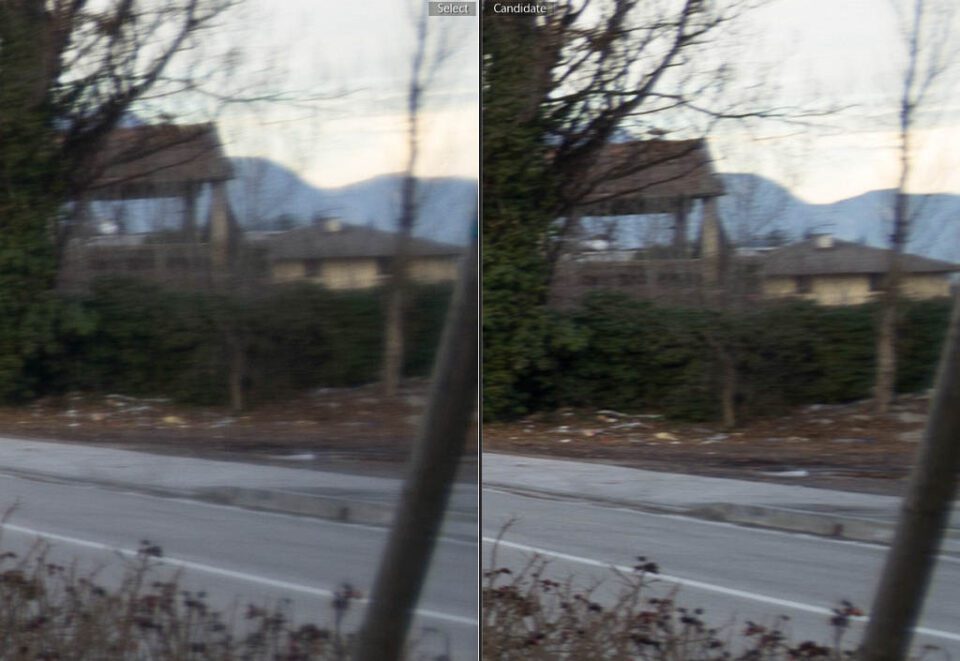
The corner performance is noticeably degraded compared to dedicated FX lenses, simply if you are willing to alive with this you have a very affordable ultra wide bending lens for an FX camera, usable up to 15mm at an aperture of f/2.eight! Keep in mind that the only other lenses that come close are the Tokina xvi-28mm f/2.8 Pro FX or the excellent, simply much more expensive Nikon 14-24mm f/2.8G ED.
Conclusion
In this post I showed you how to use two very different merely pop DX lenses for something they were never meant to exercise. Simply confronting all odds, these lenses are surprisingly adept at their job and will exist able to requite you great creative potential without adding much in the manner of toll. This is especially attractive for apprentice photographers taking the leap from DX to FX.
If you can live with the limitations of such a set-up, at least your DX lenses may have some use before you lot fully move to FX. With them you can still enjoy the better low-calorie-free functioning, brighter viewfinders and more than control over depth of field that FX offers.
Practice you know of any other DX lenses that work well on FX? We'd love to hear almost it in the comments.
Some examples of the 35mm f/1.8, from the streets of Trento, Italia:


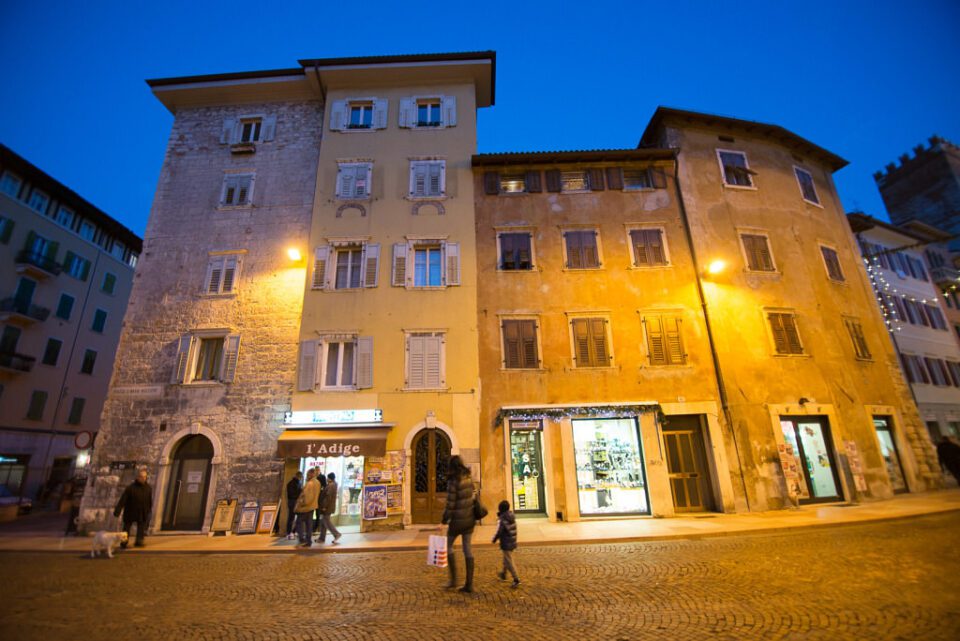
Some examples of the Tokina 11-16mm f/2.viii, from the streets of Trento, Italy:

Source: https://photographylife.com/using-nikon-dx-lenses-on-fx-cameras
Posted by: singletonmotheareeme.blogspot.com
0 Response to "Will An Fx Lens Work On A Dx Camera"
Post a Comment